How to clean solar panels safely without damaging them is a practical question, not a cosmetic one. Dust, bird droppings, pollen, and salt can form a stubborn film across the glass. NREL’s PV Fleet analysis reports typical annual soiling losses of about 2% to 4%, although harsher locations can experience much higher losses. The IEA PVPS Task 13 report also identifies soiling as a major performance factor in photovoltaic operations.
Still, more cleaning is not always better. Dr. Garvin Heath, a photovoltaic sustainability expert at the National Renewable Energy Laboratory, offers a useful reminder: “Cleaning is not always the answer.” That principle matters because hard brushes, abrasive powders, cold water on hot glass, and careless walking can cause scratches, cracks, or hidden cell damage. A panel may look bright while its output quietly declines.
This guide presents seven careful methods for cleaning panels with less risk. It considers weather, water quality, equipment choice, surface pressure, and safe inspection habits. For example, a soft microfiber head can lift loose dust without grinding grit into the coating. Early morning cleaning usually reduces thermal shock because the glass is cooler. Simple details matter.
The process is not perfectly universal. Rainfall, panel angle, nearby trees, and local pollution change the best approach. Some roofs need professional service instead. A reflective pause helps: if cleaning creates more damage than dirt, the maintenance plan has failed. The safest method is measured, gentle, and based on the panel manufacturer’s instructions.
Before touching a solar panel, inspect the roof, ladder route, and weather forecast. Rain, dew, wind, and hot glass increase slipping and thermal-shock risks. Wait until the panels are cool and completely dry. Look for cracked modules, loose cables, exposed conductors, or damaged mounting hardware. Stop immediately if you find any. Never handle wiring or connectors during cleaning. Follow the system’s shutdown procedure, or ask a qualified electrician for help. The U.S. Bureau of Labor Statistics recorded 1,069 construction deaths in 2022; 395 involved falls to lower levels. Roof access is not a housekeeping detail.
Check the panel frame, drainage paths, and nearby trees before choosing tools. NREL’s photovoltaic operations guidance identifies electrical contact, falls, heat, and arc-flash events as important maintenance hazards. Wear slip-resistant footwear and eye protection, and keep metal tools away from the modules. A second person should stay on the ground when ladder work is unavoidable. IEA PVPS Task 13 reports that soiling can reduce annual energy production by roughly 2–4%, depending on climate and system design. That loss can tempt owners to clean too aggressively. Do not. Use soft water and a non-abrasive method permitted by the equipment instructions. No checklist is perfect. Even experienced workers can miss a damaged cable beneath dust or bird droppings. Photograph questionable areas before cleaning, then arrange a professional inspection.
Complete every check before cleaning. Each bar represents one required safety check, where 1 means the check must be confirmed before work begins.
Turn off the system according to the installation guidance, inspect for damage, avoid wet or stormy conditions, use stable access equipment, keep clear of overhead electrical lines, wear suitable protective equipment, and avoid high-pressure cleaning that could damage panels or seals.
Solar panels need careful timing more than force. Clean them during a cool, cloudy morning when the glass is not hot. Early cleaning also prevents water from drying into mineral spots. Avoid windy days, because grit can scratch wet surfaces. Turn off the system according to its official instructions, and never walk on the panels.
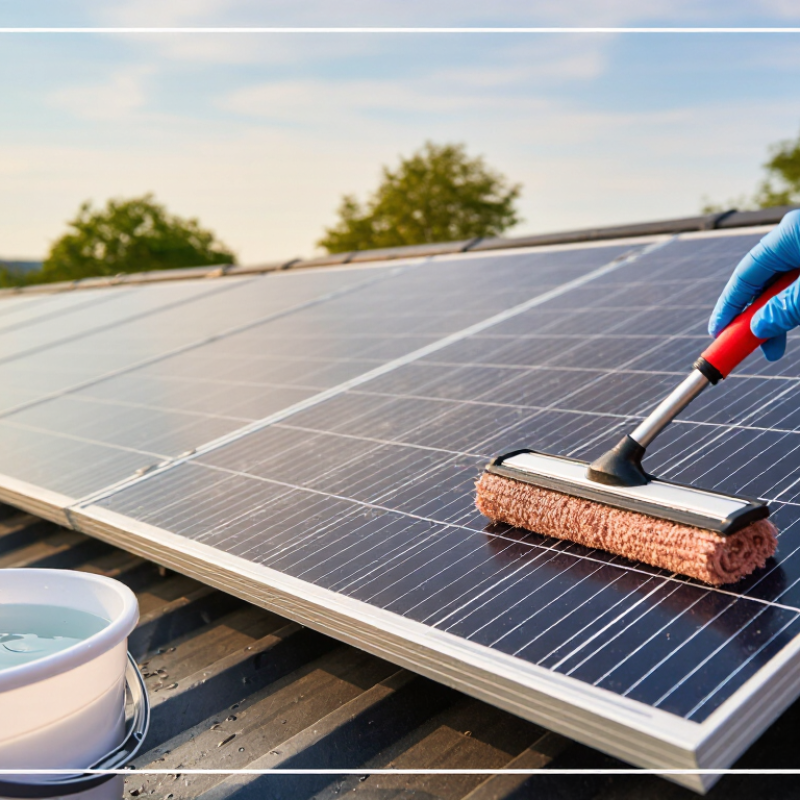
Use a soft brush, a clean microfiber cloth, and a low-pressure hose. A rubber squeegee can remove water, but worn edges may leave fine scratches. Skip pressure washers, abrasive pads, and household cleaners with ammonia or strong solvents. Plain water often removes loose dust. For bird droppings or oily marks, mix a small amount of mild, pH-neutral soap with clean water. Distilled water helps when local water contains heavy minerals.
Let stubborn dirt soak first. Do not scrape it while dry. Work from the top downward, using gentle overlapping strokes. Rinse the brush often, since trapped sand can damage the coating. A common mistake is cleaning panels under direct sun; fast drying creates streaks before you notice them. Another is assuming spotless glass guarantees better output. Shade, wiring faults, and seasonal debris may still reduce performance. If panels sit on a steep roof or show cracks, contact a qualified solar technician instead of taking a risky shortcut. Even experienced homeowners sometimes miss small damage during routine washing. A final visual check is worth the extra minute.
Removing loose dust and surface debris safely starts with timing. Work early in the morning, when panels are cool and dry. Heat can make water evaporate quickly and leave mineral spots.
Inspect the surface from the ground before approaching it. Look for cracked glass, loose frames, or tangled branches.
Use a soft, clean brush with flexible bristles to lift dust gently. A long-handled tool can reduce the need to climb.
Move debris toward the lower edge, never across the glass with force. Do not use rough cloths, metal tools, or household scouring products. Keep it gentle. Dry wiping may seem harmless, but trapped sand can create fine scratches.
I have found that a few extra minutes of inspection prevents careless cleaning.
For remaining surface dust, rinse with clean water using low pressure. Avoid directing water toward exposed electrical connections or damaged areas.
If bird residue or sticky dirt remains, follow the panel maker’s care instructions and use a soft sponge with mild, approved cleaning solution.
Never stand on the panels. Roof work also carries fall and electrical risks, so use a qualified technician when access is uncertain.
Do not rush. Surface debris can look minor, yet one hard scrape may leave permanent marks and reduce confidence in the entire cleaning process.
Washing Solar Panels Without Scratches or Water Damage
Clean solar panels on a cool, cloudy morning, never under intense midday heat. Hot glass can dry water too quickly and leave mineral spots. Before washing, check the installation guide and switch off the system as instructed. Do not step on the panels. Roof work can become dangerous, especially when surfaces are wet.
Use a soft microfiber pad or a clean, soft-bristled brush. A garden hose with gentle flow can remove loose dust without forcing water beneath the frame. Avoid pressure washers, abrasive sponges, and household cleaners containing strong chemicals. These tools may scratch the surface or weaken seals around the panel edges. Use plain water first. If grime remains, choose a mild, panel-safe cleaning solution and rinse it thoroughly.
Dry the glass with a water-fed squeegee or a clean microfiber cloth. Work in small sections, using light pressure. Inspect the frame, cable areas, and mounting points for standing water. Never spray directly at gaps, connectors, or damaged sections. It is easy to assume more pressure means better cleaning, but that approach often creates preventable problems. Even careful washing may leave spots in hard-water areas, so a final rinse with filtered water can help. If panels are heavily soiled, cracked, or difficult to reach, a qualified technician should handle the cleaning.
Inspect panels from the ground before touching them. Look for gray film, bird droppings, leaf clusters, cracked glass, and loose cables. Binoculars can reveal defects without stepping on the array. IEA PVPS Task 13 reports typical annual soiling losses of about 2% to 7%, although dry, dusty sites can lose much more. That range is easy to underestimate. A clean-looking panel may still have a thin dust layer.
Check output trends against recent weather records. A sudden drop after several dry weeks may indicate buildup, while one weak panel could signal shading or electrical trouble. NREL’s PV Operations and Maintenance Best Practices recommends combining visual inspections with performance monitoring. Record the date, weather, affected panels, and estimated dirt level.
I once treated pollen as harmless; rain later bonded it into a stubborn film.
Preventive work matters more than frequent scrubbing. Trim branches that shed leaves, remove standing water near panel edges, and inspect nearby construction or unpaved roads for dust sources. Keep drainage paths clear. Use clean water and a soft, non-abrasive tool when cleaning is necessary, preferably during cool morning conditions. Avoid pressure washers, harsh detergents, and scraping dry deposits. The World Bank’s Global Solar Atlas identifies soiling as a significant factor in solar-resource estimates, especially across arid regions. Local conditions should decide the schedule, not habit.
Choose a cool, cloudy morning when the glass is completely dry. Cool glass matters. Avoid rain, dew, strong wind, and intense midday sunlight.
Inspect the roof, ladder route, weather, frame, cables, and mounting points. Look for cracks or loose wires. Stop there if you find damage.
Follow the system’s official shutdown procedure before cleaning. Never handle wiring, connectors, or exposed conductors. Ask a qualified electrician when the shutdown process is unclear.
Use a soft brush, clean microfiber cloth, and low-pressure hose. A water-fed squeegee can remove remaining water. Keep metal tools away from the glass.
Avoid pressure washers, abrasive pads, ammonia, and strong solvents. Plain water often removes loose dust. For stubborn marks, use mild, pH-neutral soap with clean water.
Let hardened dirt soak before wiping it. Do not scrape dry deposits. Rinse the brush often, because trapped sand can create fine scratches.
No. Never step on the panels. Wet roof surfaces are especially risky. Steep roofs should be handled by a qualified technician.
Inspect the frame, drainage paths, cable areas, and mounting points for standing water. Use small sections and light pressure. I might still miss hidden damage, so photograph doubtful areas and arrange an inspection.
Not always. Shade, wiring problems, seasonal debris, and system faults can still reduce output. Cleaning too aggressively may cause more harm than ordinary dust.
Learning how to clean solar panels safely without damaging them begins with careful preparation. Before starting, switch off the system if required, check the manufacturer’s care instructions, and avoid cleaning during hot, windy, or wet conditions. Choose a cool time of day, such as early morning or late afternoon, and use clean water, a soft brush or sponge, and a non-abrasive, mild cleaning solution. Avoid harsh chemicals, rough tools, and high-pressure sprays that may scratch the surface or affect seals and electrical components.
Begin by gently removing loose dust, leaves, and other debris without dragging grit across the panels. Wash the surface with clean water and a soft tool, using light pressure and working in small sections. Rinse away all residue and allow the panels to air-dry or use a soft, lint-free cloth. After cleaning, inspect for cracks, loose frames, standing water, or persistent stains, and arrange professional assistance when needed. Regular inspections, trimming nearby vegetation, and reducing sources of dust can help prevent future buildup and maintain efficient energy production.

Stuart Solar